The Iftar Supplication: A Spiritual Guide for Breaking the Fast in Ramadan
The prayer recited when ending the daily fast, known as Roza Kholne Ki Dua, carries profound spiritual meaning for Muslims worldwide throughout Ramadan. This moment marks gratitude, devotion, and fulfillment as worshippers conclude their fast and draw nearer to Allah through this prophetic invocation.
Roza Kholne Ki Dua – The Complete Guide to Iftar Supplication in-Islam
Understanding the Iftar Supplication
Roza Kholne Ki Dua is the supplication Muslims say at Iftar, the moment of breaking the fast. Rooted in the teachings of Prophet Muhammad (PBUH), its words hold great blessings for sincere believers.
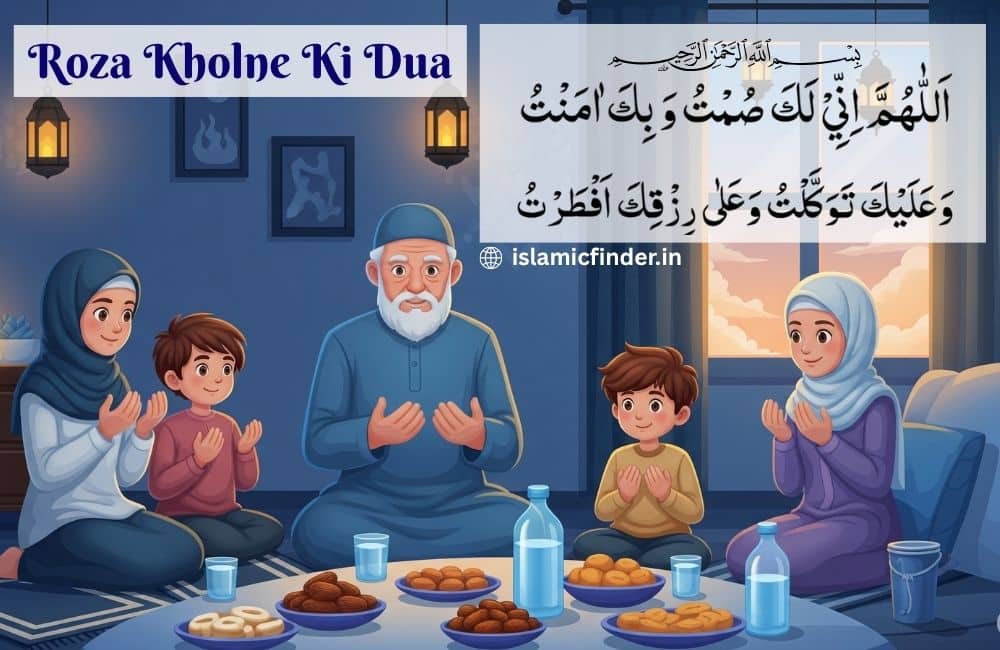
The most widespread version is:
اللَّهُمَّ إِنِّي لَكَ صُمْتُ وَبِكَ آمَنتُ وَعَلَيْكَ تَوَكَّلْتُ وَعَلَىٰ رِزْقِكَ أَفْطَرْتُ
“Allahumma inni laka sumtu wa bika aamantu wa ‘alayka tawakkaltu wa ‘ala rizq-ika-aftartu.”
Meaning: “O Allah, I fasted for Your sake, I believe in You, I rely on You, and I break my fast with Your provision.”
Why This Supplication Matters
Iftar transcends physical nourishment; it’s a deeply spiritual occasion. Authentic hadith confirm that Allah readily accepts the dua of those breaking their fast. The Prophet (PBUH) stated:
“Indeed, the supplication of the fasting person at the time of breaking the fast is not rejected.” (Ibn Majah)
This makes Iftar a uniquely powerful time for prayer. Muslims are urged to seek forgiveness, guidance, health, and their needs from Allah just before and during Iftar.
Reciting the Dua: Timing and Intention
The supplication should be recited immediately before consuming the first item to break the fast, be it a date, water, or other food. Focus the heart sincerely on Allah and engage the tongue mindfully in remembrance.
Another Authentic Iftar Supplication
A second dua from prophetic tradition is also commonly used:
ذَهَبَ الظَّمَأُ وَابْتَلَّتِ الْعُرُوقُ وَثَبَتَ الْأَجْرُ إِنْ شَاءَ اللَّهُ
“Dhahaba al-zama’u wabtallat al-‘urooqu wa thabata al-ajru in shaa’ Allah.”
Meaning: “Thirst is quenched, the veins are refreshed, and the reward is assured, Allah willing.”
The Prophet (PBUH) often recited this dua, making it equally valid and rewarding.
The Rewards of Reciting the Iftar Dua
- Following the Prophet’s Example: Using this dua aligns Iftar with the Sunnah.
- Dua Acceptance: Leverages a moment when prayers are highly likely to be answered.
- Completing Worship : Marks the fulfillment of the sacred act of fasting.
- Cultivating Gratitude: Fosters thankfulness for Allah’s sustenance and blessings.
Memorizing the Supplication
A simple approach to learn the dua:
- Segment it: Break the Arabic text into smaller, manageable parts.
- Daily Practice:Recite it consistently before each Iftar.
- Grasp the Meaning: Understanding the translation aids retention.
- Share the Knowledge : Teaching others reinforces your own memory.
Benefits of Praying at Iftar
- Deepened Faith: Strengthens the connection with Allah.
- Inner Peace: Assurance that prayers are heard brings comfort.
- Devotional Routine: Builds habits of daily remembrance and thankfulness.
- Family Unity: Collective recitation fosters spiritual bonding.
Enhancing Your Iftar Spiritually
- Perform Wudhu: Cleanliness Elevates the Spiritual Mindset.
- Begin with Dates/Water: Follow the Prophet’s Sunnah.
- Pray Before Eating: Use these precious moments for focused dua.
- Minimize Distractions: Prioritize dhikr and supplication over chatter.
- Express Thanks : Acknowledge Allah’s provision after eating.
Clearing Up Misconceptions
- Only One Valid Dua? Both duas mentioned are authentic and acceptable.
- Arabic Only? While Arabic is ideal, personal supplications in one’s language after the Arabic dua are encouraged.
- Rushing is Okay?The dua should be recited mindfully and with intent, not hastily.
Teaching Children the Iftar Dua
Introducing children to this practice helps:
- Build their relationship with Allah early.
- Establish family traditions rooted in Sunnah.
- Instill understanding of spiritual meaning beyond ritual.
Encourage them to repeat the dua, explain its significance, and offer positive reinforcement for their efforts.
Praying for Others During Iftar
Reflecting the Prophet’s (PBUH) practice, consider this dua for the host:
“Afṭara ʿindakum al-ṣā’imūn, wa akala ṭaʿāmakumu al-abrar, wa ṣallat ʿalaykum al-malā’ikah.”
Meaning: “May the fasting break their fast with you, may the righteous eat your food, and may the angels send blessings upon you.”
This fosters community spirit and goodwill.
In Essence
Roza Kholne Ki Dua is far more than words spoken before a meal. It is a profound declaration of faith, trust, gratitude, and total reliance on Allah. Reciting it with sincerity, understanding, and devotion amplifies its reward and fulfills the Sunnah of Prophet Muhammad (PBUH).
As we seek spiritual growth during Ramadan, let us cherish this blessed supplication at every Iftar and share its importance within our families and communities.